Bring Authentic Flavors to Your Designs with Thai Street Food Clipart
There’s a particular energy to Thai street food markets—the sizzle of a wok, the vibrant colors of fresh ingredients, the intricate details of a perfectly folded spring roll. Capturing that authentic, sensory experience for a digital project can be a challenge. Generic food icons often feel sterile and lack personality. This is precisely where a well-crafted collection of Thai Street Food Clipart becomes an invaluable design asset, offering a direct bridge between the bustling streets of Bangkok and your creative work.
The Hand-Painted Appeal of Watercolor Illustrations
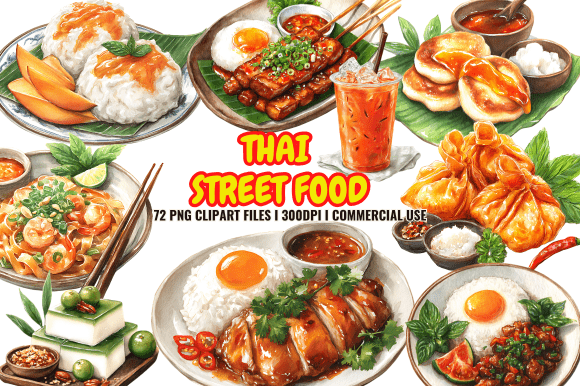
This collection isn't about flat, vectorized icons. The style is distinctly hand-painted watercolor, a choice that profoundly influences its application. The textures are soft, with visible brushstrokes and gentle color bleeds that mimic real paint on paper. This aesthetic immediately conveys warmth, craftsmanship, and authenticity. You’ll find the iconic swirl of Pad Thai noodles, the glossy sheen of a Mango Sticky Rice dessert, and the smoky char on Moo Ping skewers rendered with a level of detail that feels personal and inviting. The transparent PNG format is practical, allowing these illustrations to layer seamlessly over photos, patterns, or solid backgrounds in your layout.
For a designer, the personality of these assets is key. They aren’t trying to be minimalist or hyper-modern. Instead, they lean into a handwritten font sensibility through illustration, perfect for projects that aim to feel artisanal, homegrown, or culturally rich. Think of them as the visual equivalent of a script font—full of character and best used where that character can shine without competing with a dozen other design elements.
Strategic Applications: From Menus to Brand Identities
Understanding where these cliparts excel is about matching their style to the project's goals. Their practical value is extensive, but context is everything.
For Restaurants and Food Brands
A physical menu or a digital ordering page benefits immensely. Using a small cluster of these illustrations as decorative borders or to highlight a "Chef's Special" can break up text-heavy layouts and guide the customer's eye. For a logo design or brand identity for a Thai eatery, a single, meticulously chosen clipart—like the elegant Thai Iced Tea glass—can serve as a foundational brand mark. It’s more memorable and specific than a generic spoon-and-fork icon, directly communicating the cuisine's specialty.
In Digital Marketing and Social Media
Social media graphics thrive on visual stops. A Thai Street Food Clipart of sizzling Pad Kra Pao can become the centerpiece of an Instagram story promoting a lunch special. For a food blogger, these are perfect for creating cohesive recipe cards or section dividers for a website, adding a consistent, thematic touch that enhances reader engagement. The high 300 dpi resolution ensures they look crisp even when scaled for various screen sizes.
Packaging and Editorial Design
In packaging design for a spice mix or a ready-to-eat meal, these watercolor illustrations can evoke a sense of tradition and quality that a photograph sometimes cannot. For editorial design—a cookbook, a magazine feature, or a travel blog—they provide authentic visual storytelling. They work exceptionally well alongside clean, modern sans serif fonts for body text, creating a beautiful contrast between the organic illustrations and structured typography.
Making It Work: Practical Guidance for Your Project
Before you add this collection to your cart, a thoughtful evaluation ensures it’s the right fit. Consider these points as a creative professional would.
- Evaluate Project Fit: Does your project's tone align with a watercolor, hand-painted aesthetic? This style communicates warmth and authenticity. It may not align with a project requiring a sleek, modern typography look or a corporate feel. Ask if the "personality" of the clipart supports your intended message.
- Test Font Pairings: The illustrations are detailed. Pair them with typefaces that provide balance. A strong, geometric sans serif font for headlines can ground the organic shapes of the food. A clean, readable serif font for body copy can add a touch of elegance. Avoid overly ornate script fonts that might compete for attention and reduce readability.
- Leverage the Collection: With 72 files, you have a toolkit, not just a single image. Use multiple illustrations to create a visual system—for example, using different skewers and dishes from the set to categorize menu sections. This builds consistency and strengthens recognition.
- Understand the Specs: The files are high-resolution PNGs, not SVGs. This means they are perfect for print projects (like print on demand merchandise, posters, or packaging) and high-quality digital use, but they cannot be infinitely scaled without pixelation. For very large format applications like banners, plan your sizing accordingly.
- Commercial License is Included: This is a critical detail for entrepreneurs and small business owners. The included commercial use license allows you to use these assets in products for sale, client work, and branded materials without additional fees, making it a sound investment for a professional design assets library.
Ultimately, the strength of this Thai Street Food Clipart collection lies in its specific, evocative style. It doesn’t try to be everything. Instead, it offers a high-quality, authentic solution for projects that need to visually tell a story about Thai cuisine, culture, and the inviting experience of street food. When used thoughtfully, it can elevate a design from merely functional to genuinely engaging, creating a memorable connection with your audience. For the designer or business owner with the right project, it’s more than clipart—it’s a key ingredient in your visual strategy.